
Collection: Rifle Upgrades
AR rifle parts are what define how your rifle performs. Every component plays a role in reliability, accuracy, and how the gun feels in your hands.
There’s a wide range of quality in this category. Some parts are built to last, others are not worth installing. The difference shows up quickly once you start shooting.
We carry AR rifle parts that are proven to fit correctly, function reliably, and hold up over time, so you can build or upgrade your rifle with confidence.

-
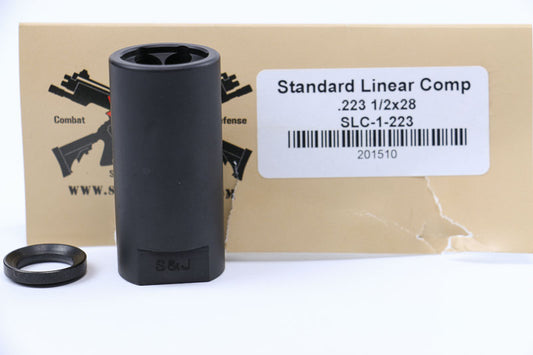
AR15 223 Linear Compensator Type 1 smooth 2" long
Regular price $50.00 USDRegular price$65.00 USDSale price $50.00 USDSale -
Breek Arms AR15 Warhammer MOD2 Charging Handle Black
Regular price $50.00 USDRegular price -
AR15 223 Linear Compensator Type 2 lined 2" long
Regular price $55.00 USDRegular price$65.00 USDSale price $55.00 USDSale -
AR15 223 Nano Linear Comp Nano Plain 1.5" S&J Hardware
Regular price $50.00 USDRegular price$60.00 USDSale price $50.00 USDSale -
AR15 223 Nano Comp Nano Lined 1.5" S&J Hardware
Regular price $60.00 USDRegular price$65.00 USDSale price $60.00 USDSale


The AR platform is modular by design — almost every component can be swapped or upgraded. That flexibility is useful, but it also means there is a lot of low-quality hardware in the market. Bolt carrier groups, triggers, handguards, and charging handles are the upgrades that make the most meaningful difference in reliability and shootability. BCG quality directly affects cycling reliability. Trigger upgrades improve reset and pull. Handguards determine what accessories you can mount and how the rifle balances. We carry AR parts that meet a functional standard — correct dimensions, proper steel specs, and proven function under real use.
FAQ
What is the most important AR upgrade for reliability?
The bolt carrier group (BCG). A quality BCG with proper steel specification, correct gas key staking, and a smooth carrier finish is the foundation of a reliable AR. Low-quality BCGs from unknown manufacturers are the leading cause of premature cycling failures and broken components. If you are building or upgrading, invest in the BCG before anything else.
What handguard length should I use?
Handguard length is a matter of preference and intended use. Longer handguards allow a more extended grip and provide more rail space for accessories. Shorter handguards are lighter and easier to maneuver in confined spaces. For a general-use rifle, a mid-length handguard around 13-15 inches on a 16-inch barrel is a practical choice.
Do free-float handguards improve accuracy?
Yes, in most cases. A free-float handguard does not contact the barrel, which eliminates pressure on the barrel that can pull point of impact when the gun is gripped or a bipod is used. For precision applications, free-float is standard. For general use and close-range work, the improvement is less noticeable but still there.
Are mil-spec parts actually better than commercial spec?
Mil-spec and commercial refer to dimensional specifications, not quality. The most notable difference is buffer tube diameter — mil-spec and commercial buffer tubes are slightly different sizes, and stocks are not interchangeable between them. Mil-spec is the more standard choice for builds. Higher quality comes from the manufacturer's materials and manufacturing standards, not the spec designation.